Export Check Templates
You can export check templates to easily share or reuse your quality check settings across different systems or projects. This saves time by eliminating the need to recreate the same checks repeatedly and ensures that your quality standards are consistently applied. Exporting templates helps maintain accuracy and efficiency in managing data quality across various environments.
Let’s get started 🚀
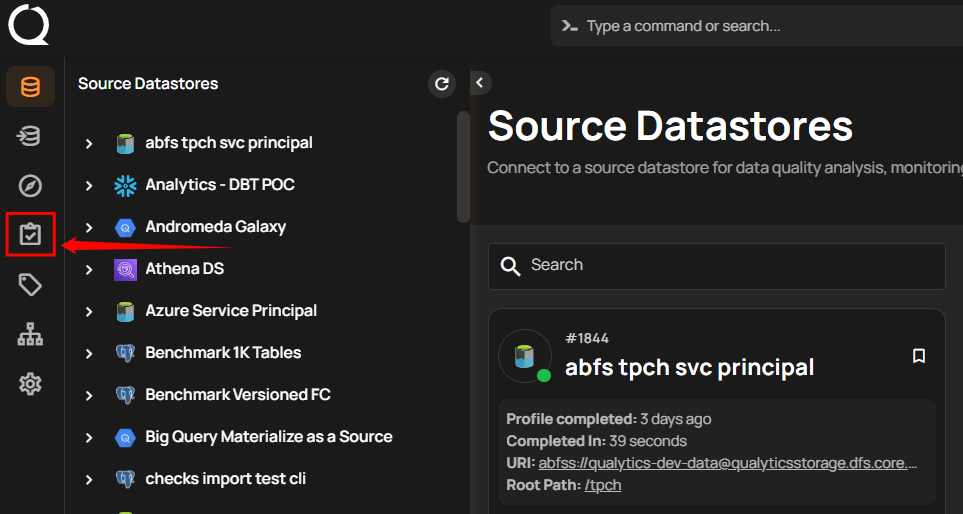
Step 1: Log in to your Qualytics account and click the “Library” button on the left side panel of the interface.
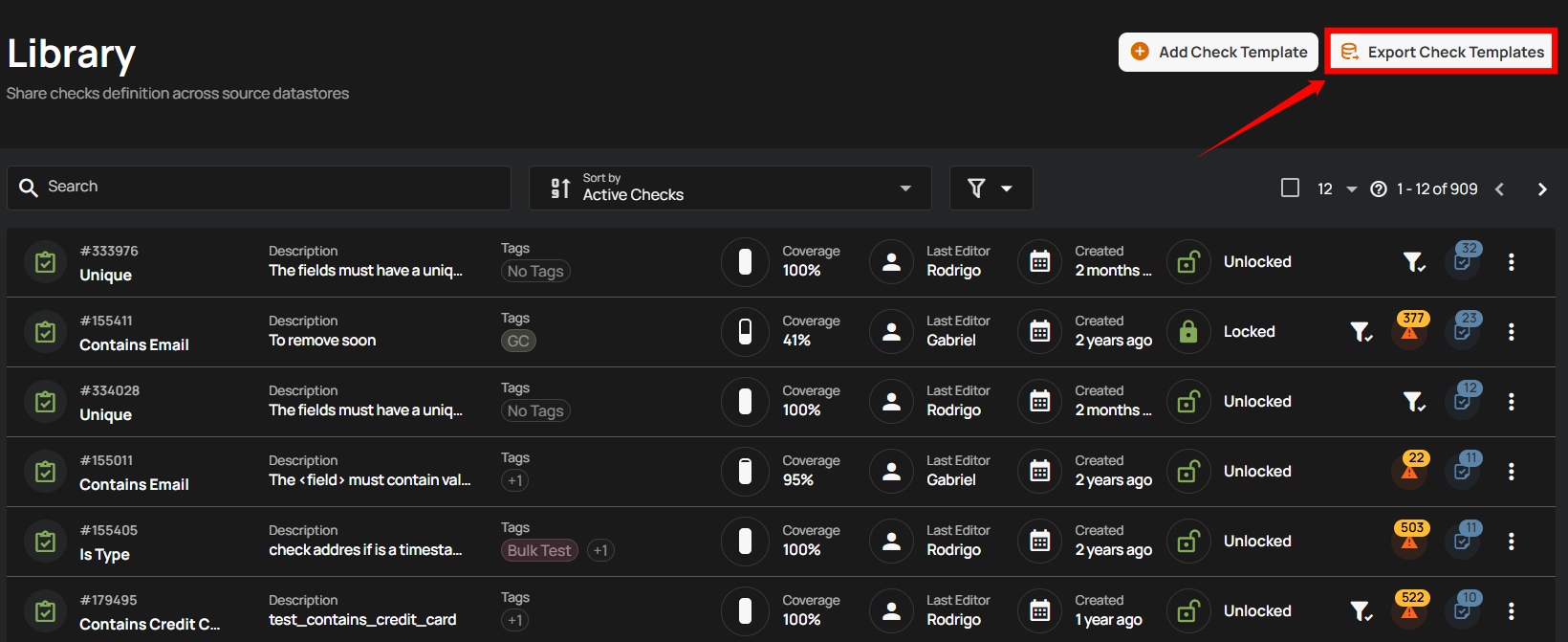
Step 2: Click on the “Export Check Template” button located in the top right corner.
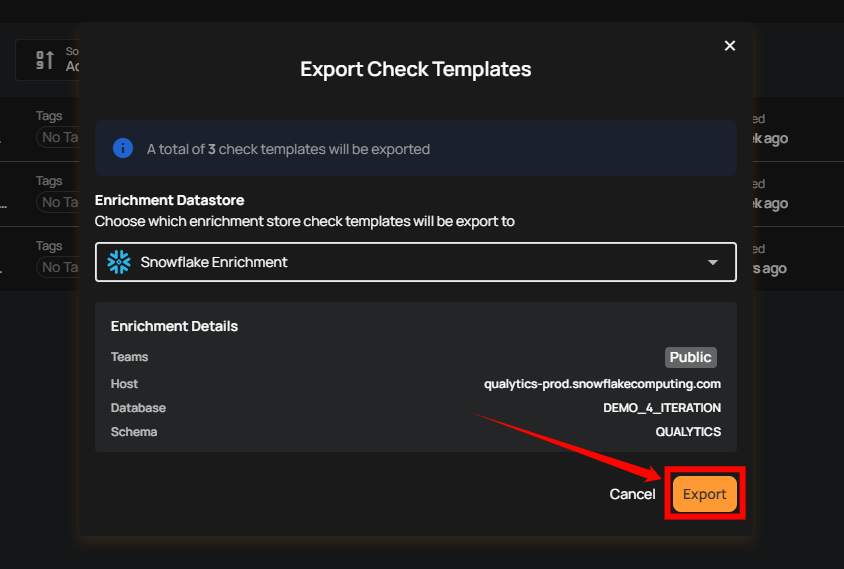
Step 3: The Export Check Templates dialog appears. Select the enrichment datastore that will receive the exported templates.
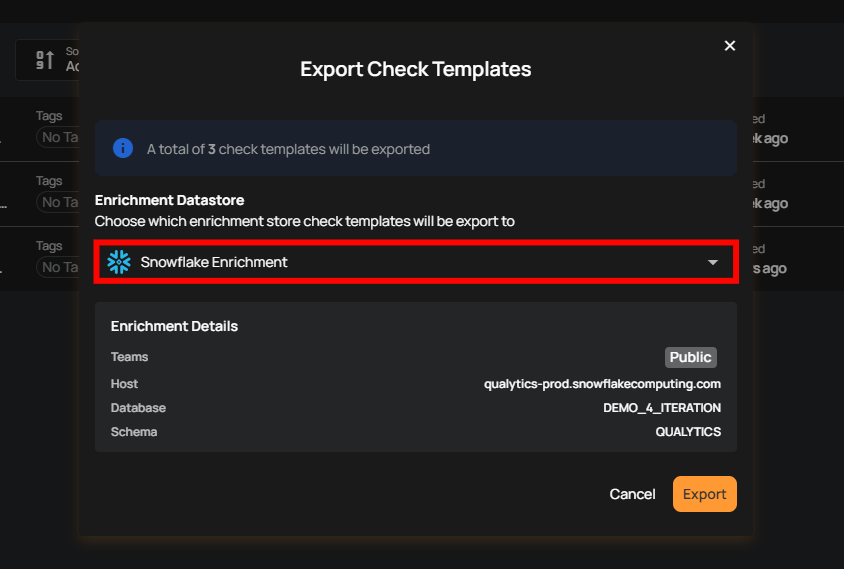
Step 4: Once you have selected the enrichment datastore, click Export.
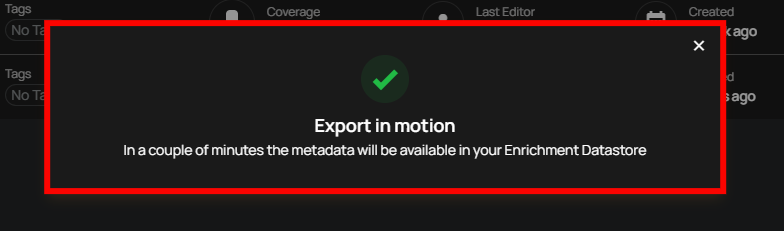
After clicking “Export,” the process starts, and a message will confirm that the metadata will be available in the enrichment datastore you selected shortly.
Review Exported Check Templates
Sync and profile the enrichment datastore first
Check templates belong to the whole organization rather than to a datastore, so this export does not trigger the automatic sync that other writes do. Run Sync on the selected enrichment datastore to discover the output container, then Profile it to inspect its fields and records in Qualytics.
Step 1: Open the enrichment datastore you selected. In the datastore tree, the Enrichment filter chip narrows the list to enrichment datastores.
Step 2: Open the Tables or Files tab, depending on whether it is a JDBC or a DFS datastore, and filter by Purpose set to Export. The exported templates are in the container named _export_check_templates, shown with the Export badge. It has no writing datastore, since check templates belong to the whole organization rather than to any one datastore.
When you export check templates, you can reuse them for other datastores, share them with teams, or save them as a backup. Once exported, the templates can be imported and customized to fit different datasets, making them versatile and easy to adapt.
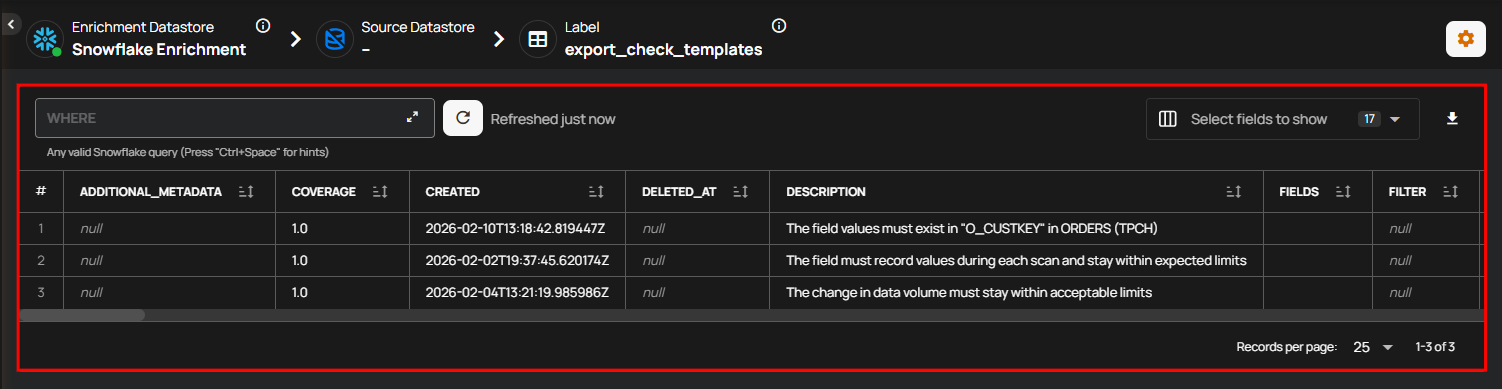
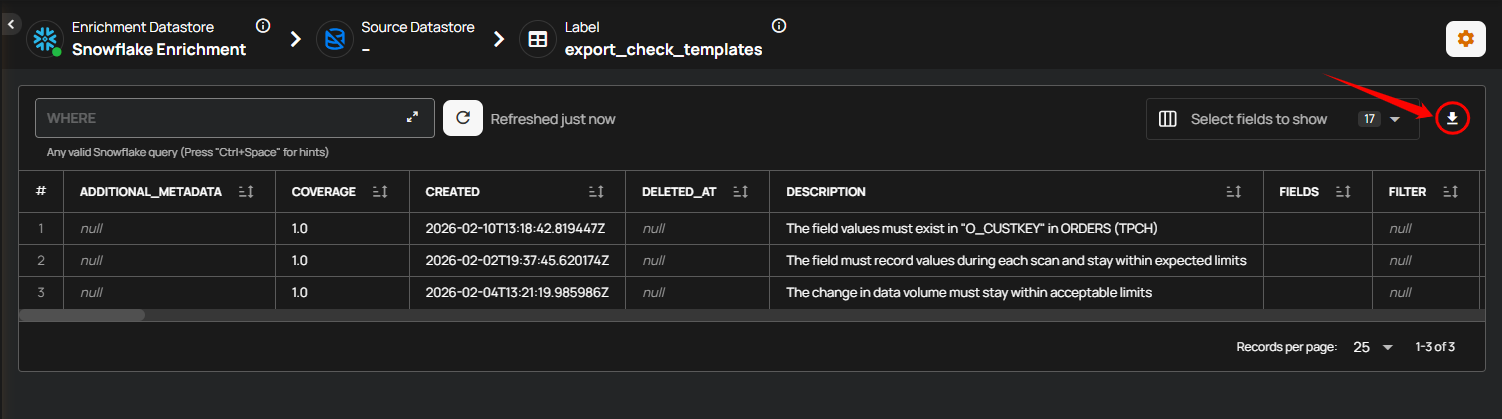
You also have the option to download them as a CSV file, allowing you to share or store them for future use.